

Fish Identification is More Than Naming the Catch
When anglers recognize the fish, understand the water it prefers, and connect that knowledge to seasonal hatches and available food, they become better observers, better stewards, and more successful fly fishers.
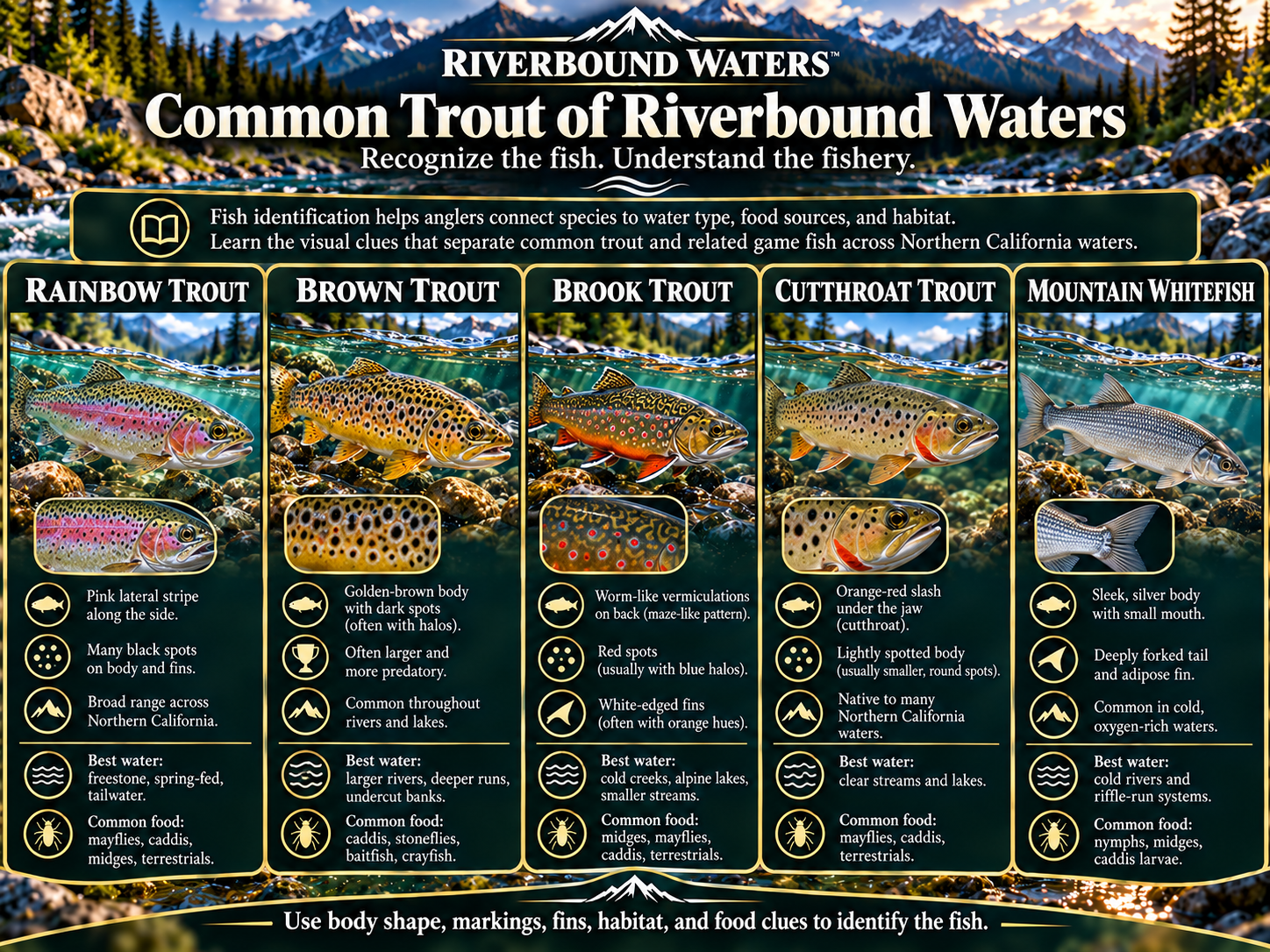
Common Trout of Riverbound Waters™
Recognize the Fish. Understand the Fishery
Knowing what you have caught is part of understanding the water you are fishing. Trout species differ in coloration, spotting patterns, body shape, habitat preference, and feeding behavior. Riverbound Waters™ brings those clues together so anglers can move beyond simply naming a fish and begin understanding why that species is found in a particular water and what food sources are most important to it.
Rainbow Trout — Recognized by its pink-to-red lateral stripe and dark spotting. Rainbows occupy a wide range of trout waters and commonly feed on mayflies, caddis, midges, terrestrials, and other available food.
Brown Trout — Typically golden-brown with dark and often reddish spots. Browns frequently favor deeper runs, undercut banks, structure, and cover, and larger fish can become increasingly predatory.
Brook Trout — Known for worm-like markings across the back, colorful red spots, and light-edged fins. Brook trout are strongly associated with cold creeks, smaller streams, and alpine waters.
Cutthroat Trout — Identified most easily by the distinctive orange-to-red slash beneath the jaw. They inhabit clear streams and lakes and feed on many of the same aquatic insects and terrestrials important to other trout.
Mountain Whitefish — A streamlined, silver fish often found in cold, well-oxygenated rivers. Whitefish commonly feed below the surface on nymphs, midges, caddis larvae, and other drifting aquatic foods.
Use the markings. Read the habitat. Know the fish
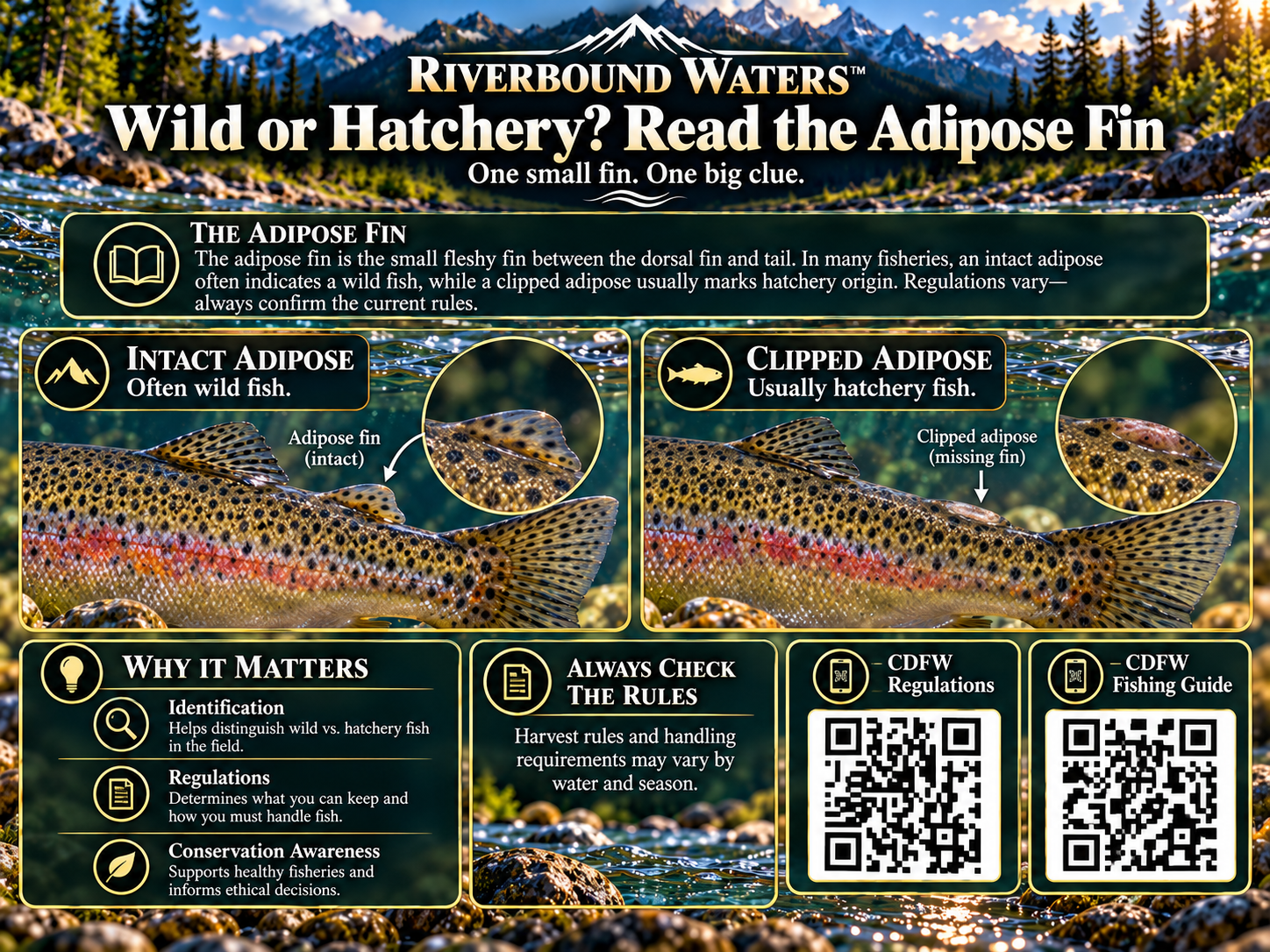
Wild or Hatchery?
One Small Fin. One Big Clue
A small feature located between the dorsal fin and tail can provide an important clue about a trout's origin. In many California fisheries, an intact adipose fin is associated with wild fish, while a clipped adipose fin is commonly used to identify hatchery-origin fish. Learning to recognize the difference helps anglers understand the fishery, follow applicable regulations, and make better conservation decisions.
Intact Adipose Fin — The small fleshy fin remains visible between the dorsal and tail fins. In fisheries using adipose clipping, this commonly indicates a wild or naturally produced fish.
Clipped Adipose Fin — The adipose fin has been intentionally removed as a marking method and commonly identifies hatchery-origin fish.
Why It Matters — Wild and hatchery fish may be managed differently. Harvest limits, required release, seasons, and handling rules can vary by water.
Always Check Current Regulations — The fin is an identification clue, not a substitute for current California Department of Fish and Wildlife regulations.
Identify the fish. Know the rules. Protect the resource.