

Observe the Clues. Understand the Change. Then Adjust
TROUBLESHOOTING THE WATER
When the River Changes, Change With It.
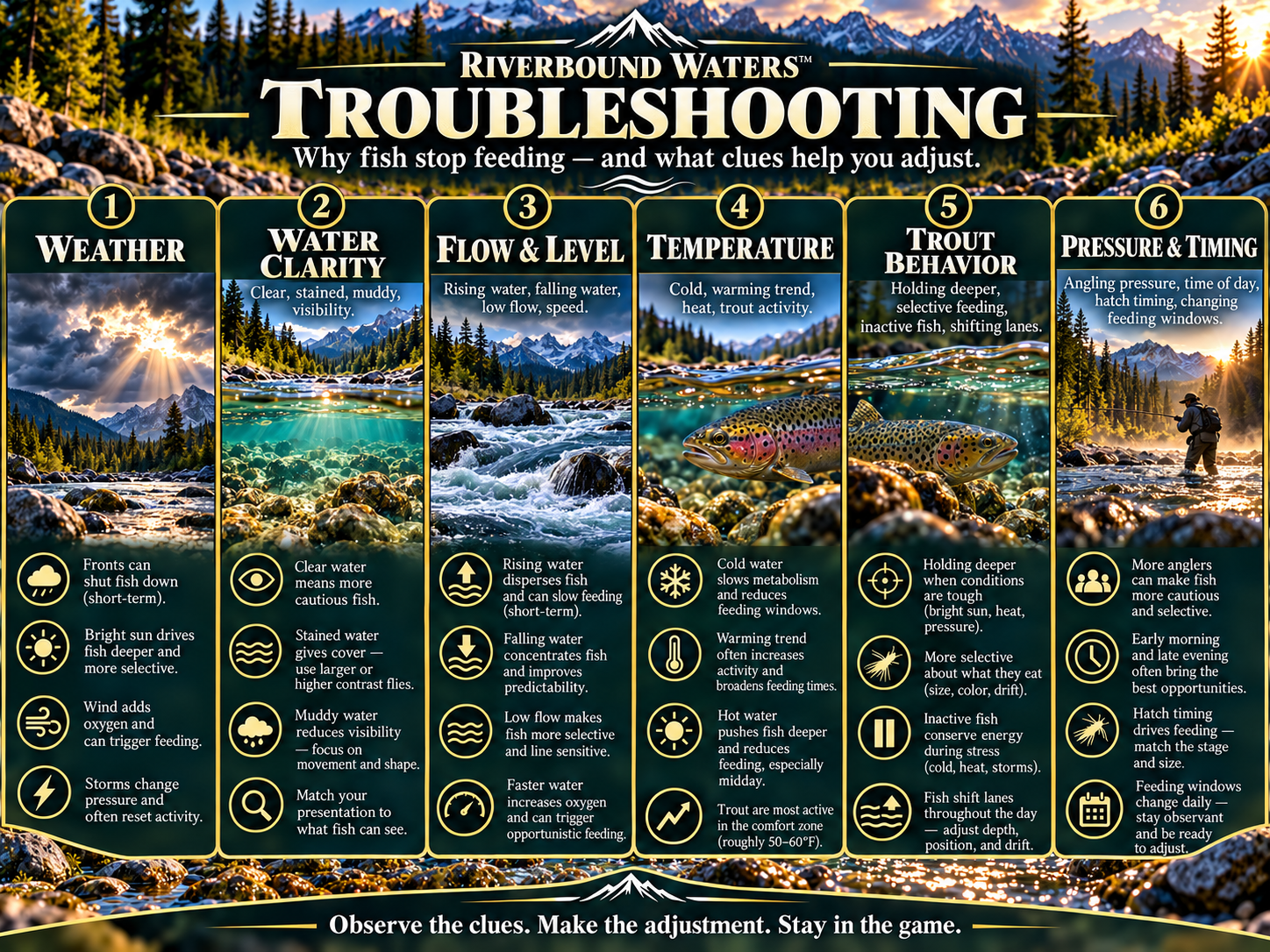
Successful fly fishing is rarely about finding one perfect fly and using it all day. Weather, water clarity, flow, temperature, fishing pressure, and trout behavior are constantly changing. Riverbound Waters™ troubleshooting teaches the angler to recognize those clues before randomly changing equipment or flies. The goal is simple: observe what has changed, understand what it means, and make the smallest adjustment needed to stay connected with the fish.
WEATHER: Clouds, sunlight, wind, storms, and changing fronts can quickly alter trout activity. Bright conditions may push fish deeper or make them more cautious, while wind and changing weather can trigger new feeding opportunities.
WATER CLARITY: Visibility affects both the trout and the fly. Clear water often requires more natural presentations and greater caution. Stained water may favor stronger profiles or contrast, while muddy conditions make movement, silhouette, and proximity more important.
FLOW & LEVEL: Rising, falling, fast, or low water changes where trout hold and how they feed. Higher flows may spread fish into protected areas, falling water can concentrate them, and low flows often make trout more selective and sensitive to disturbance.
TEMPERATURE: Water temperature influences trout metabolism, oxygen, and feeding activity. Cold water can slow feeding, warming water may increase activity, and excessive heat can push trout toward deeper, cooler, or better-oxygenated water.
TROUT BEHAVIOR: The fish themselves provide some of the best clues. Trout may move deeper, change feeding lanes, become selective, stop feeding, or shift position as conditions change. Watch the fish before assuming the fly is wrong.
PRESSURE & TIMING: Fishing pressure, time of day, and hatch timing can completely change a productive stretch of water. Early and late periods may offer better opportunities, while heavily pressured fish often require a more careful approach and presentation.
Don’t Guess Why the Fish Stopped Biting. Read the Clues
HOW TO ADJUST
Small Changes Can Turn a Difficult Day Around.
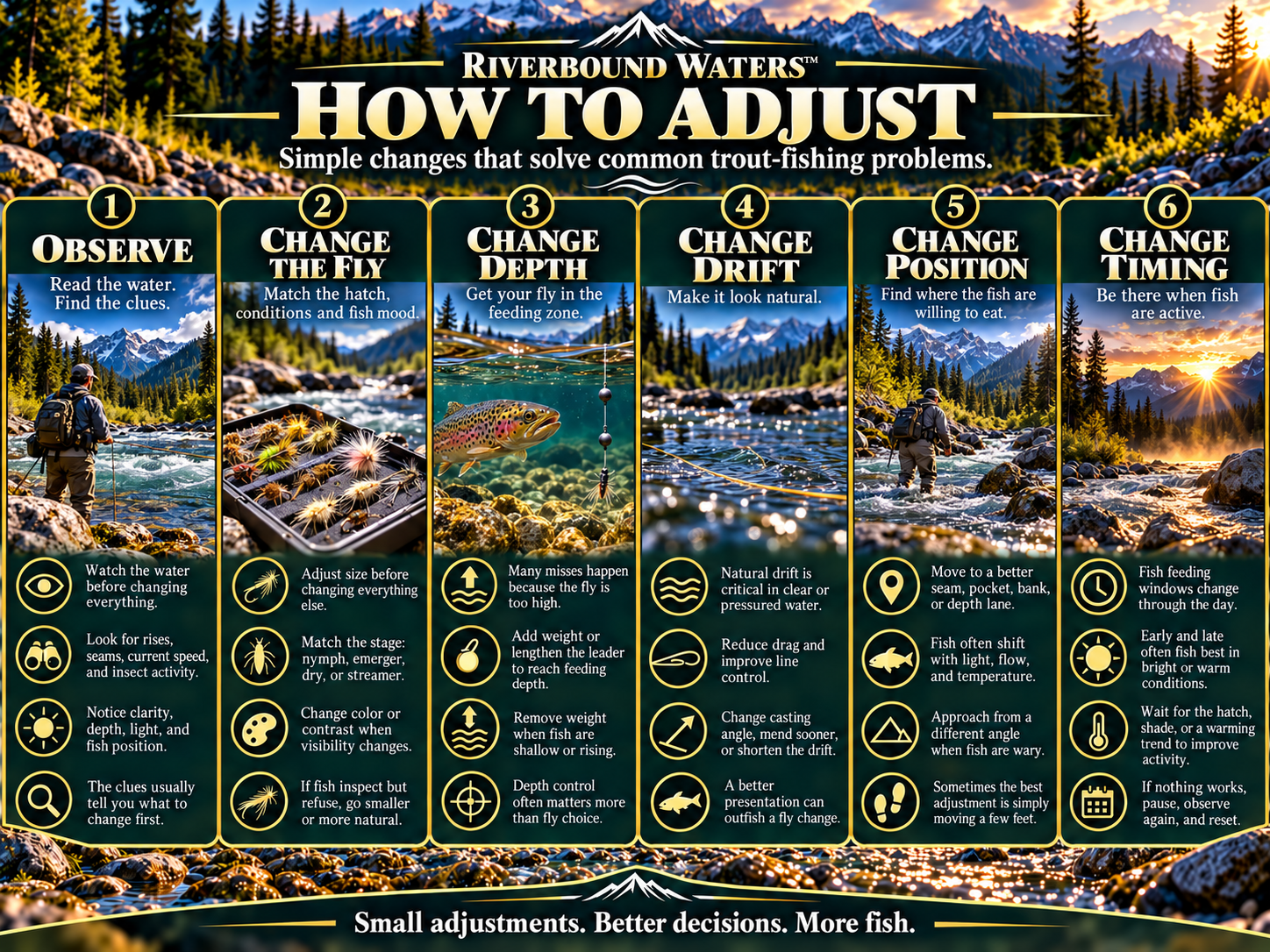
Troubleshooting does not mean changing everything at once. Once you identify what the river and the trout are telling you, make one deliberate adjustment and watch what happens. Riverbound Waters™ organizes those adjustments into five practical choices—fly, depth, drift, position, and timing—beginning with the most important step of all: observation.
OBSERVE: Before changing anything, read the water. Look for rising fish, current seams, insect activity, water clarity, depth, light, and where trout appear to be holding. The clues often tell you what to change first.
CHANGE THE FLY: Match the food and the feeding stage before simply reaching for another pattern. Adjust size, life stage, color, profile, or visibility. If trout inspect the fly but refuse it, a smaller or more natural imitation may be the better answer.
CHANGE DEPTH: A good fly at the wrong depth may never reach the fish. Add weight, lengthen the leader, or adjust the rig to reach deeper feeding lanes. When trout move shallow or begin rising, reduce weight and bring the presentation upward.
CHANGE THE DRIFT: Trout expect natural food to move naturally. Reduce drag, improve line control, change the casting angle, mend earlier, or shorten the drift. Often, improving presentation is more effective than changing the fly.
CHANGE POSITION: Sometimes the problem is not the pattern—it is where you are fishing it. Move to another seam, pocket, bank, depth, or current lane. Even moving a few feet can completely change the presentation and the fish you can reach.
CHANGE TIMING: Feeding windows move throughout the day. Light, temperature, insect activity, and fishing pressure all affect when trout become active. If the water goes quiet, waiting for a hatch, shade, evening light, or changing conditions may be the smartest adjustment.
Don’t Guess Why the Fish Stopped Biting. Read the Clues.