

Understand the kind of water → Understand its structure →
Learn to read everything happening within it.

THE WATERS
Know the Water. Understand the Fish. Fish With Purpose.
Understanding the water is one of the first steps toward understanding the fish. Trout waters behave differently depending on where the water comes from, how it flows, and how temperature, season, insects, and structure influence the river. Riverbound Waters™ organizes trout streams into three primary types—Tailwater, Freestone, and Spring-Fed—so anglers can quickly recognize the character of the water and better anticipate how to approach it.
TAILWATER — River sections below dams where controlled releases often create more stable flows and temperatures. Tailwaters can support consistent insect life, productive feeding, and strong trout growth throughout much of the year.
FREESTONE — Naturally flowing rivers and streams shaped primarily by rainfall, snowmelt, runoff, and seasonal conditions. Water levels and temperatures change more dramatically, creating classic riffles, runs, pools, pocket water, and constantly changing fishing opportunities.
SPRING-FED — Rivers and streams supplied largely by underground springs. These waters are typically cold, clear, and relatively stable in temperature and flow, often supporting rich aquatic vegetation, abundant insect life, and trout that can become highly selective.
Learn the pieces. Understand the connections. Then let the water tell you what to do next.
TROUT WATER STRUCTURE
Read the Current. Find the Lie. Understand the Trout.
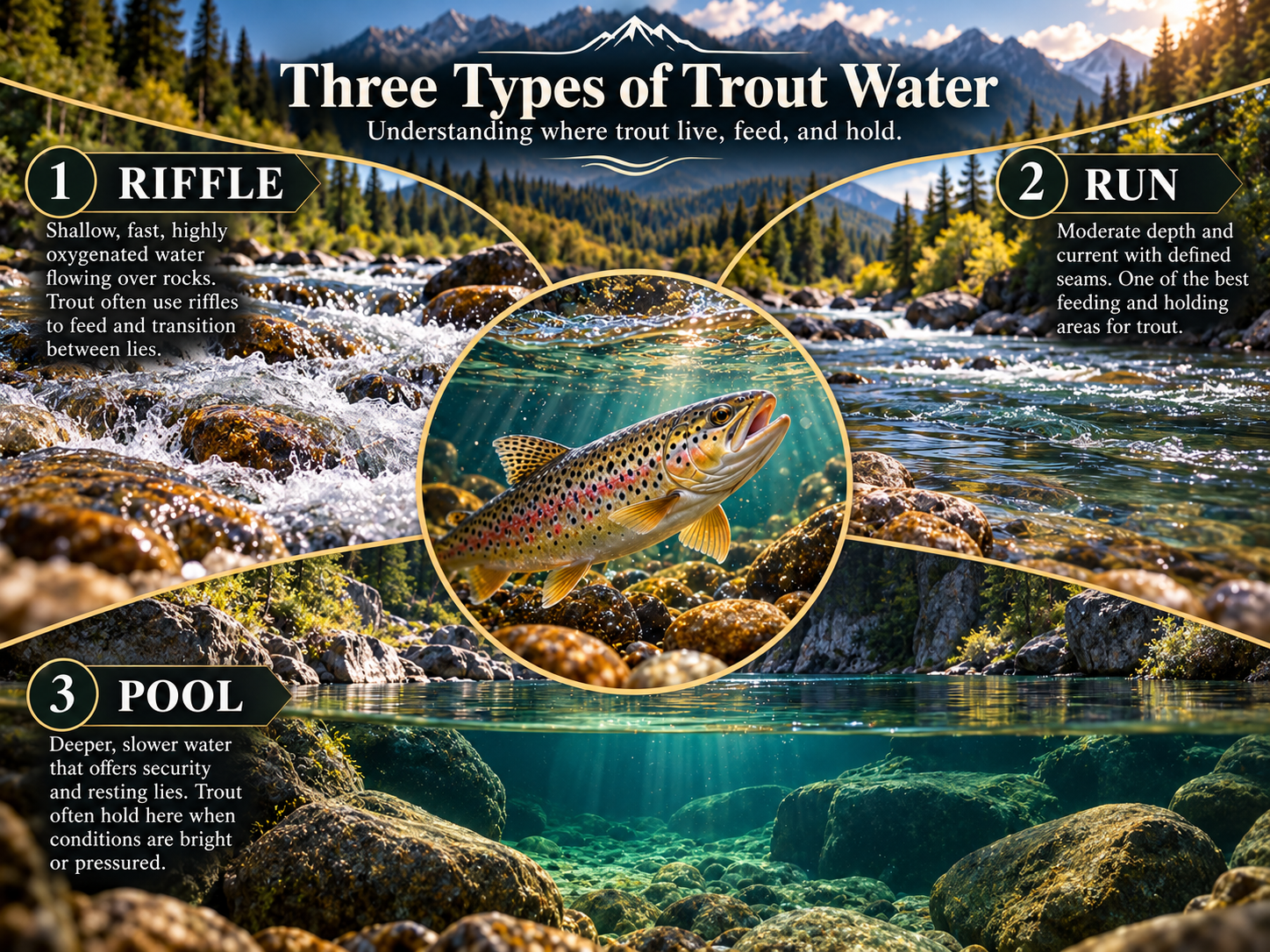
Once you understand the type of river, the next step is learning how trout use the water within it. Changes in depth, current, oxygen, cover, and structure create different holding and feeding areas. Riverbound Waters™ breaks these into three fundamental forms—Riffles, Runs, and Pools—so anglers can quickly recognize where trout are most likely to feed, rest, and move.
RIFFLE — Shallow, fast, highly oxygenated water flowing over rocks. Riffles often support abundant insect activity and give trout productive feeding lanes, while also serving as transition areas between deeper lies.
RUN — Moderate-depth water with steady current and more defined seams. Runs combine food delivery, depth, and cover, making them some of the most dependable feeding and holding water in a trout stream.
POOL — Deeper, slower water that gives trout security, shelter, and resting areas. Pools become especially important during bright conditions, heavy fishing pressure, low flows, or when trout are conserving energy.
Learn the pieces. Understand the connections. Then let the water tell you what to do next.
READ THE WATERS
Read the Water. Follow the Food. Find the Fish.
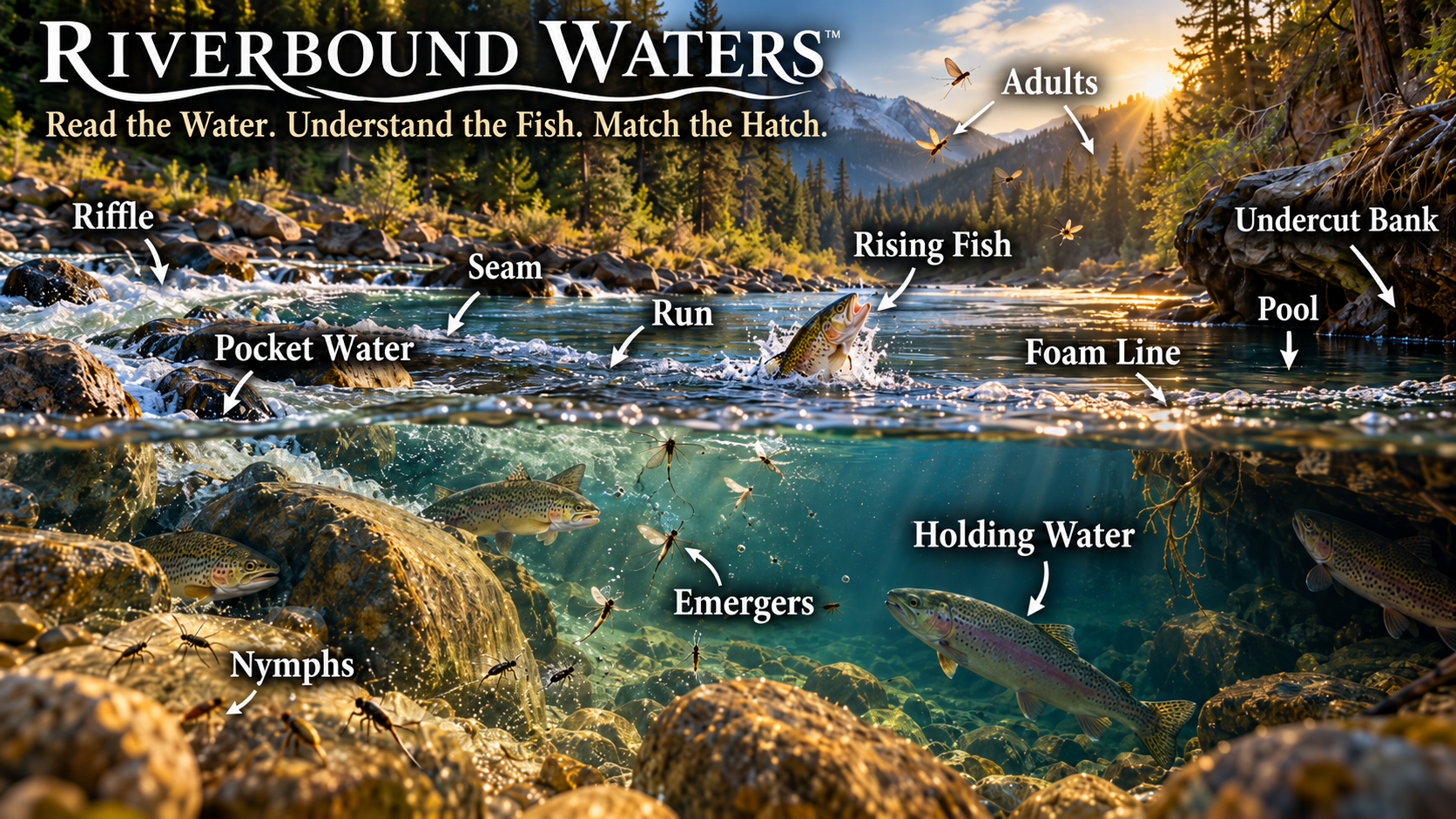
A trout stream is constantly giving you clues. Current speed, depth, seams, structure, insects, and surface activity all help reveal where trout are holding and what they may be feeding on. Riverbound Waters™ teaches anglers to read these signals together so they can identify productive water, understand trout behavior, and choose a presentation with purpose.
RIFFLE — Shallow, broken, oxygen-rich water where current moves food quickly and trout often feed actively.
POCKET WATER — Small protected areas behind and beside rocks where trout can escape stronger current while remaining close to passing food.
SEAM — The boundary between currents of different speeds. These natural feeding lanes concentrate drifting insects and give trout an efficient place to hold.
RUN — Moderate-depth water with steady current that provides both food delivery and comfortable holding positions.
POOL — Deeper, slower water offering security and resting habitat, especially during bright light, low flows, or heavy fishing pressure.
FOAM LINE — A visible surface current where foam, debris, and often insects collect. What gathers on the surface frequently indicates a productive feeding lane below.
UNDERCUT BANK — Eroded shoreline extending beneath the bank, providing shade, protection, and excellent holding cover for trout.
HOLDING WATER — Areas where current, depth, structure, and cover allow trout to remain in position while conserving energy and watching for food.
NYMPHS — Immature aquatic insects living beneath the surface. They make up a major portion of a trout’s diet and are frequently carried through feeding lanes by the current.
EMERGERS — Insects transitioning from their underwater stage toward the surface. Trout often key on them as they rise through the water column.
ADULTS — Mature insects found on or above the water. Their presence can signal an active hatch and provide clues about which fly to select.
RISING FISH — Trout feeding at or near the surface. The location and pattern of rises can help reveal both the food source and the best presentation.
Learn the pieces. Understand the connections. Then let the water tell you what to do next.