

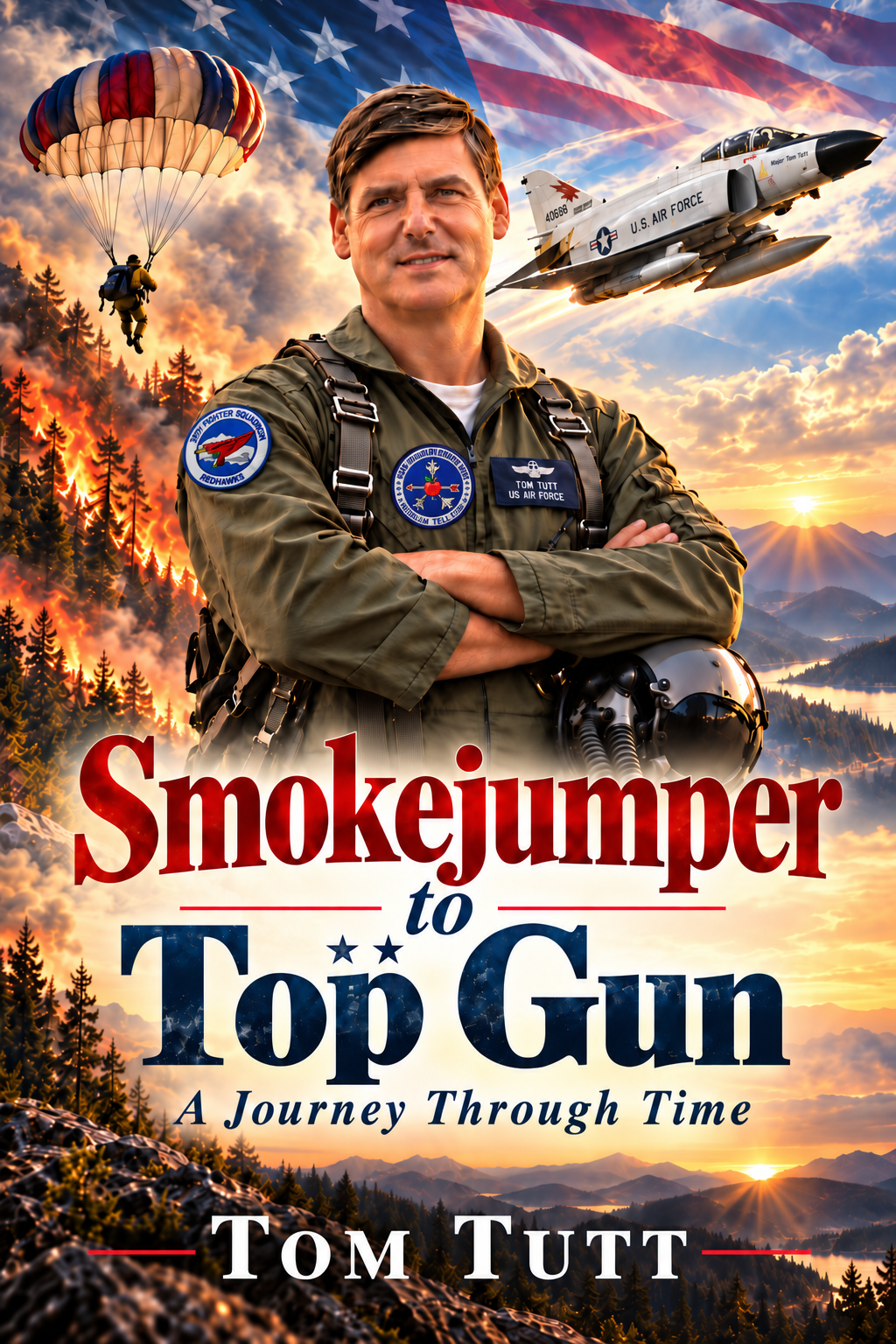
Smokejumper to Top Gun, A Journey Through Time, From smoke-filled mountain skies to the cockpit of high-performance fighters, Tom Tutt’s life was anything but ordinary.
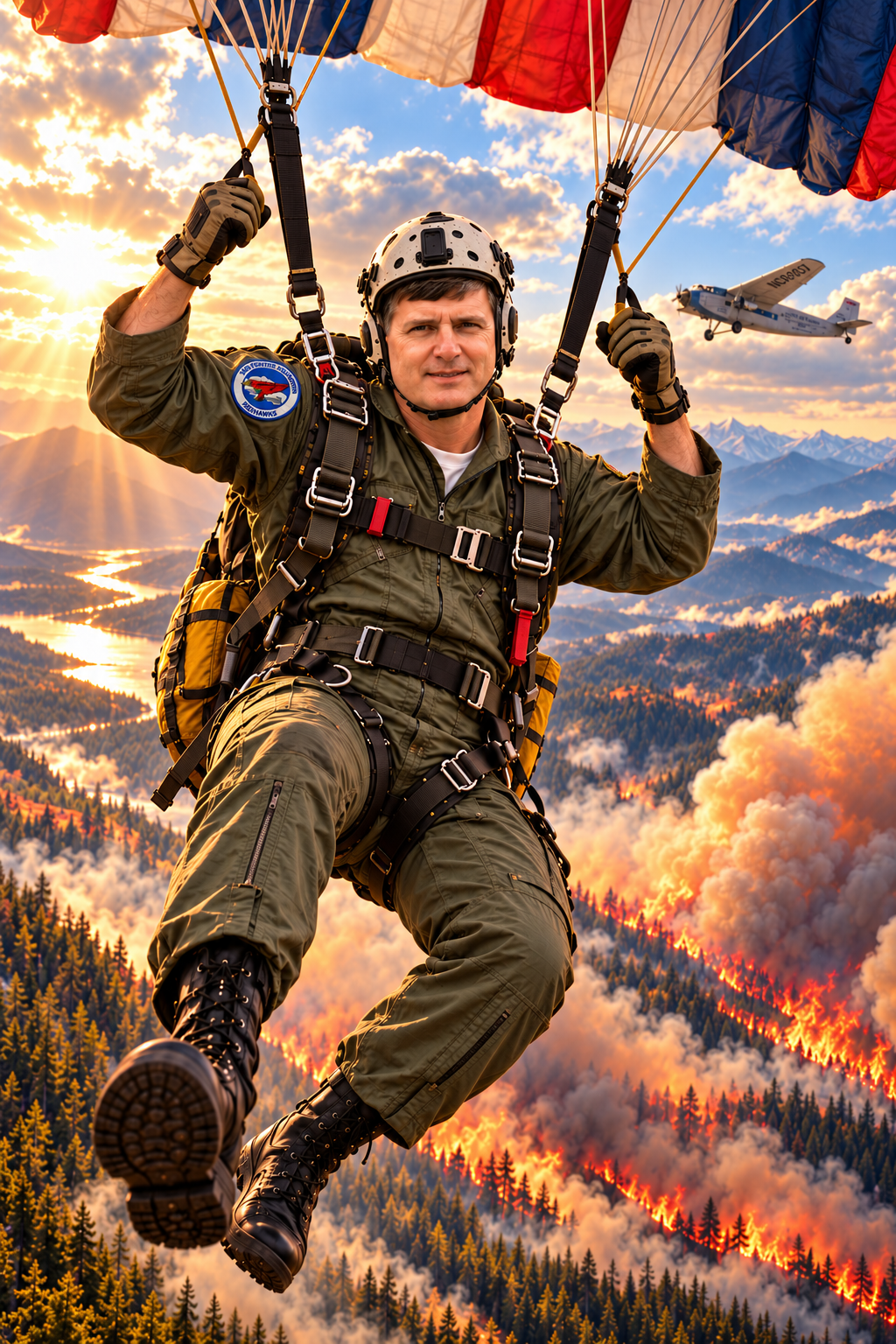
As a young Montana smokejumper, Tom learned courage the hard way—jumping from aircraft such as the legendary Ford Trimotor into remote country carrying nearly 120 pounds of gear, where every landing marked the beginning of a fight against wildfire.
That same determination eventually carried him into military aviation.
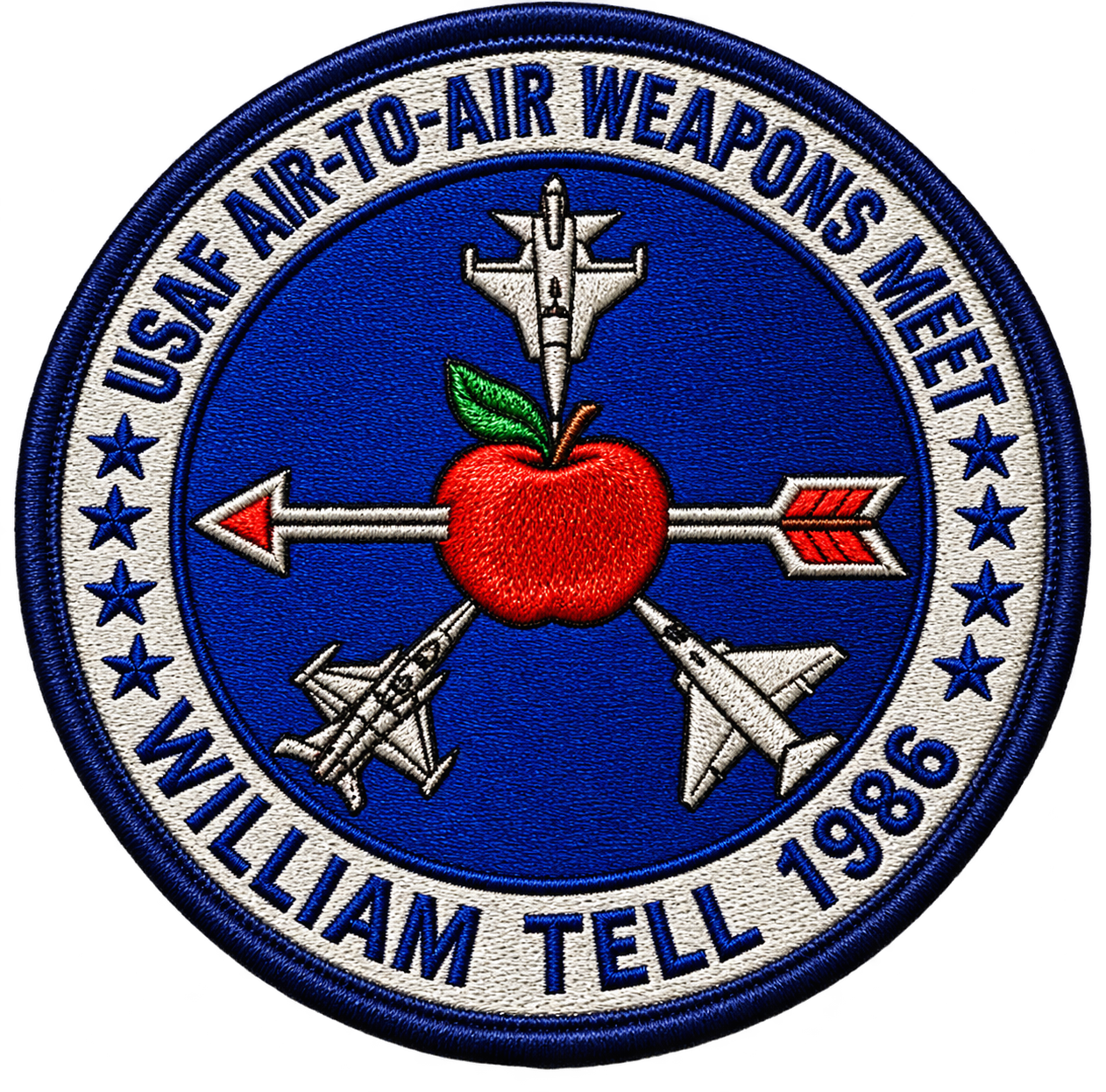
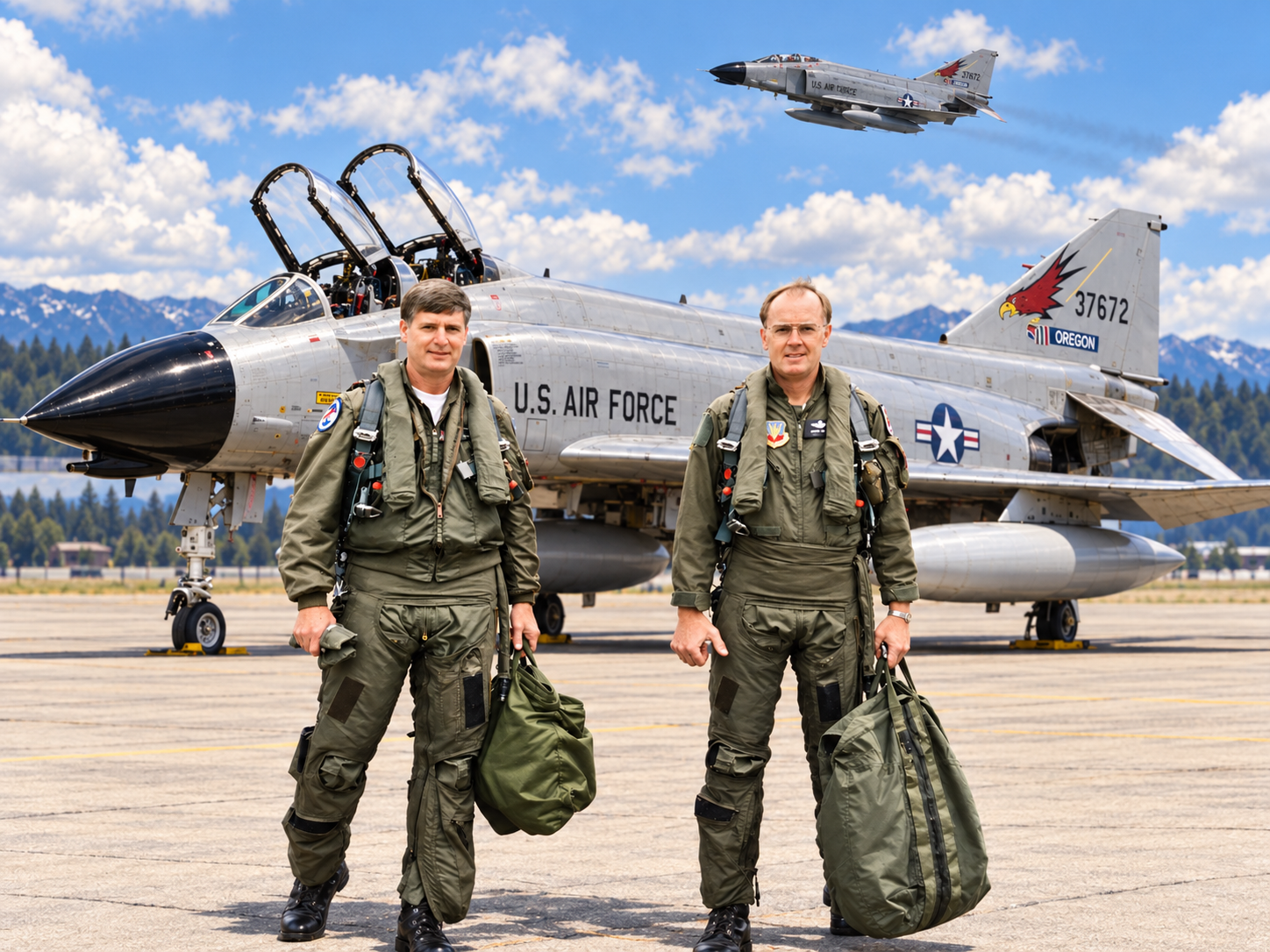
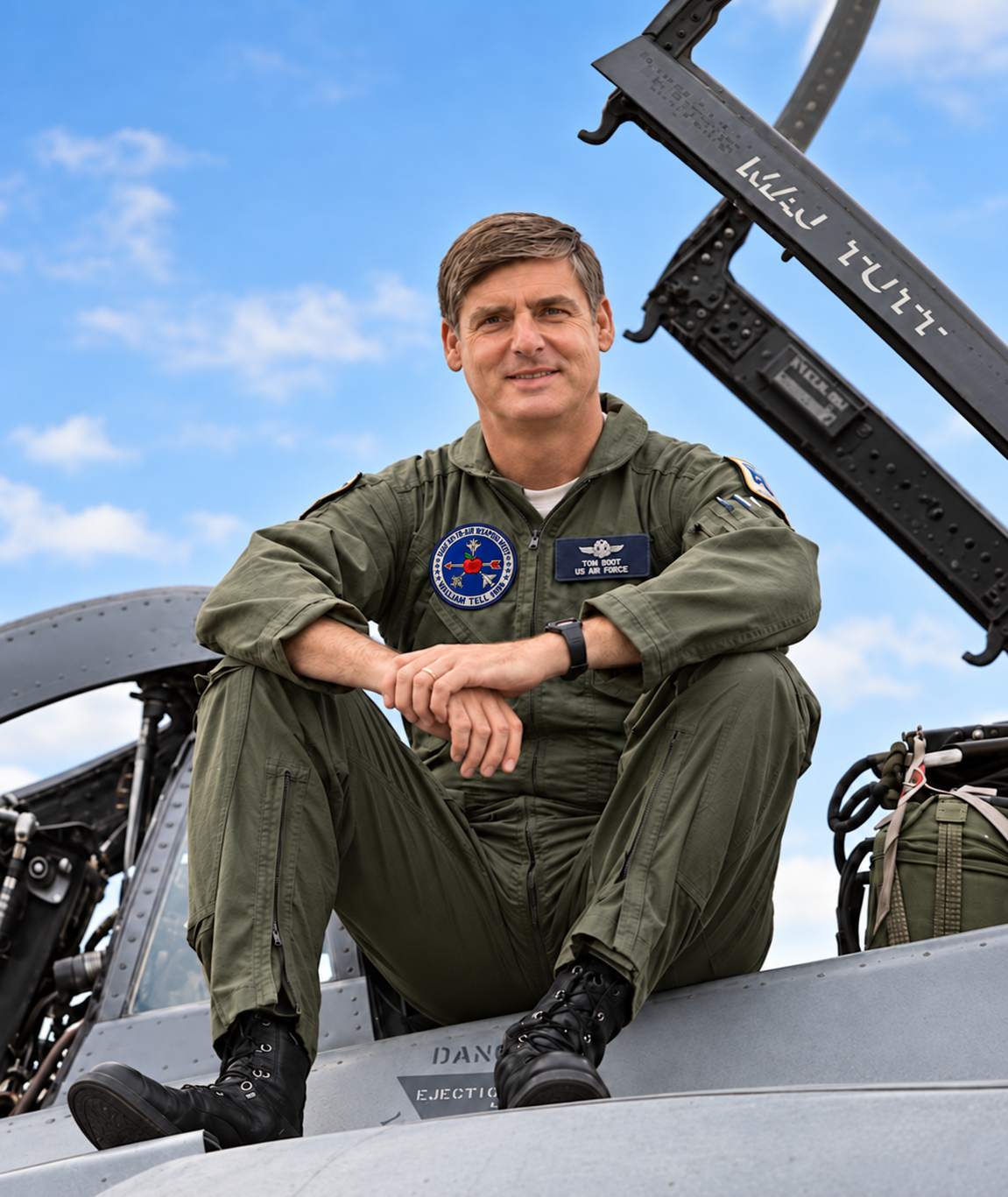
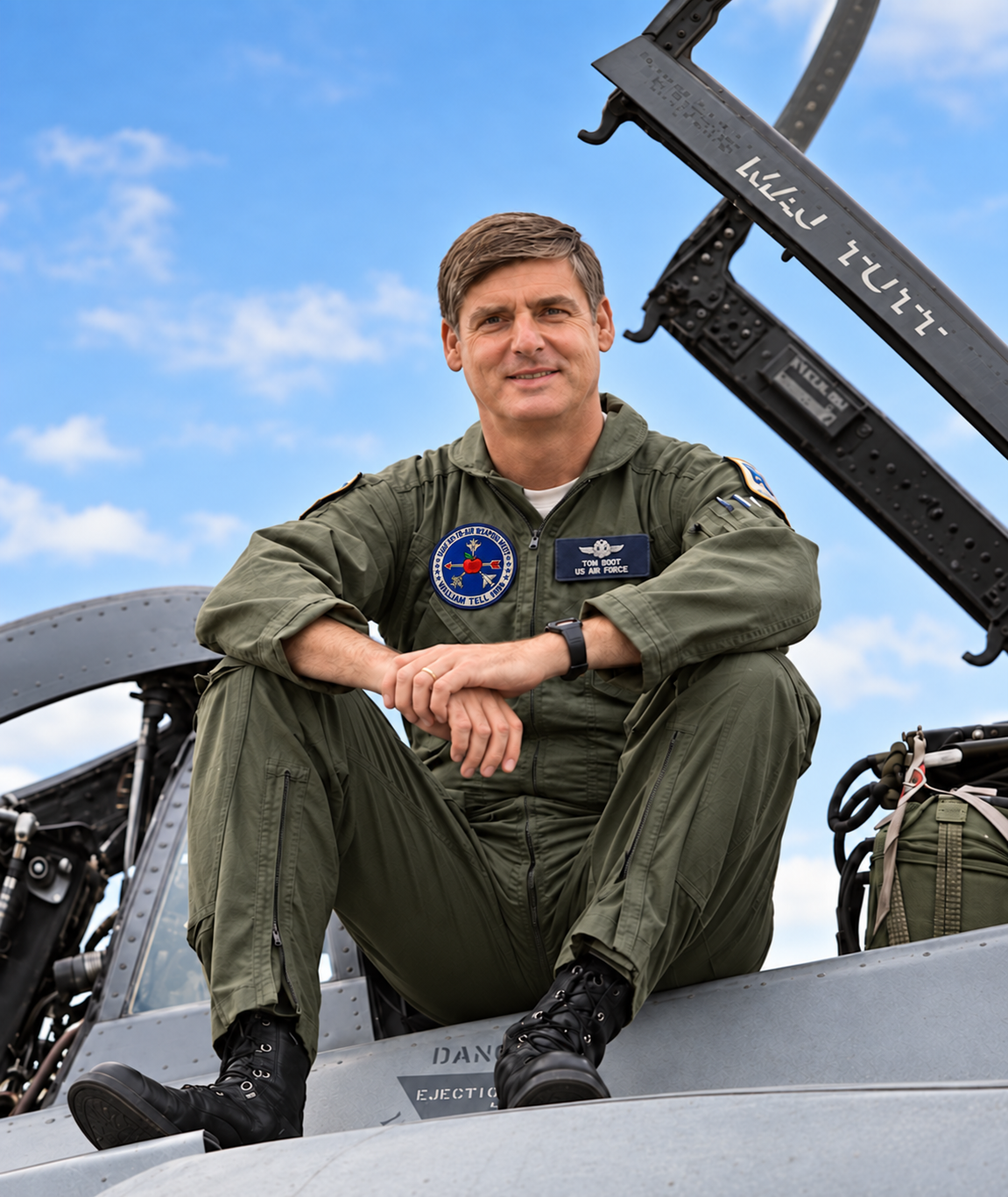
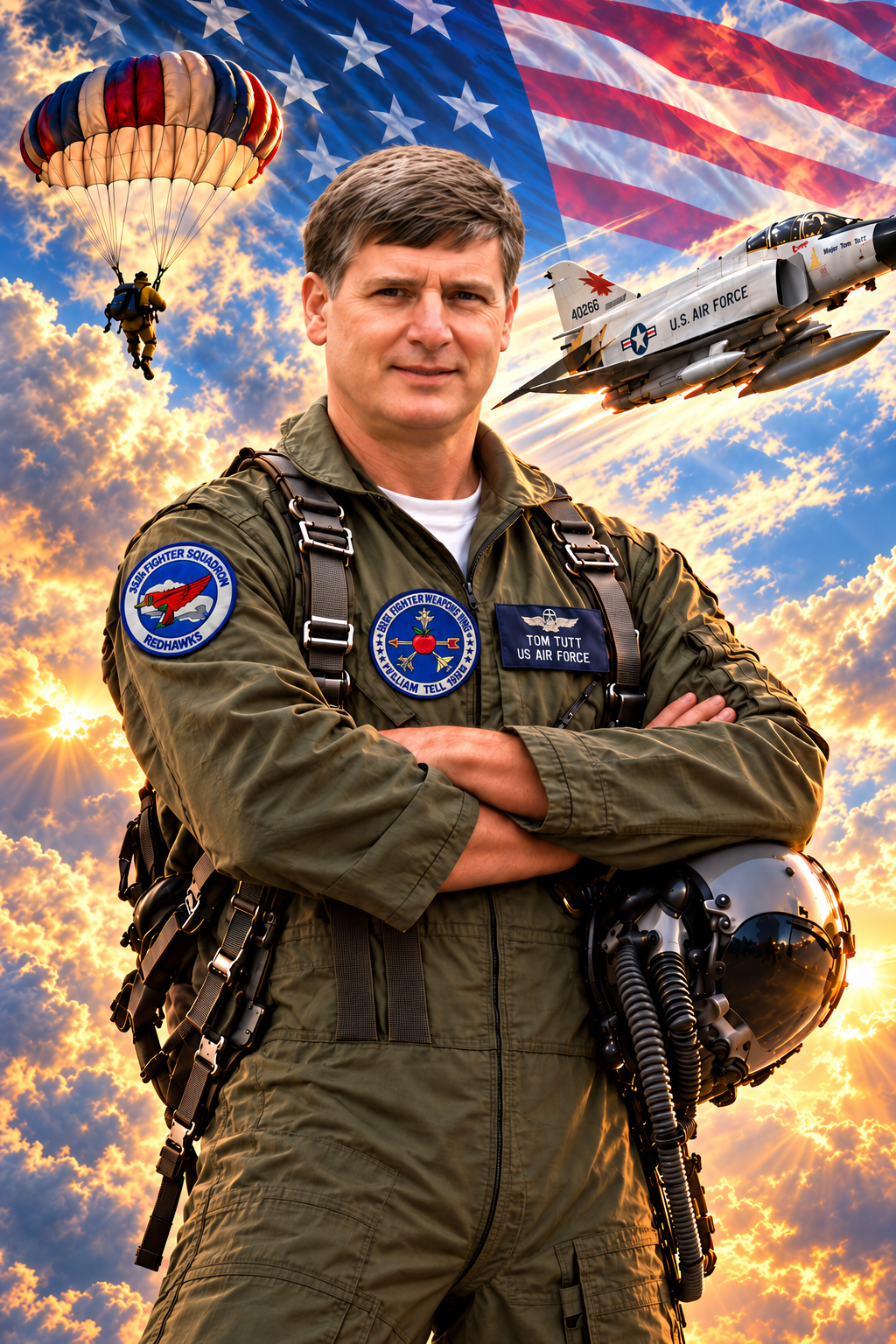
After earning his commission in the U.S. Air Force, Tom went on to build an extraordinary flying career that included more than 700 combat hours in Southeast Asia and service with the Oregon Air National Guard’s 123rd Fighter Interceptor Squadron, the Red Hawks. He flew both the F-101 Voodoo and the F-4 Phantom II and ultimately became part of a William Tell championship team—the real-all-world “Top Gun” competition of its era.
But flying was only part of his story.
Tom also built a successful career in the lumber business, served in increasingly senior leadership positions in the Air National Guard, rose to the rank of Colonel, and carried with him a lifelong love of adventure, friendship, golfing, and fly fishing.
Smokejumper to Top Gun: A Journey Through Time is the remarkable story of one man’s path through wildfire, war, aviation, business, and service.
It is a story of courage, persistence, and a life lived fully—from the mountains below a parachute to the sky above in an F-4 Phantom II.

Why Tom Wrote : Smokejumper to Top Gun
Tom Tutt wrote Smokejumper to Top Gun: A Journey Through Time to preserve the experiences, people, and extraordinary events that shaped a life spanning some of the most remarkable chapters of twentieth-century America.
His story began far from the cockpit of a fighter jet. As a young smokejumper in Montana, Tom learned about courage, teamwork, responsibility, and self-reliance while parachuting into remote wilderness to fight forest fires. Those experiences became the foundation for a life in which challenge was something to be faced rather than avoided.
Aviation eventually took him much farther.
Tom went on to serve in the U.S. Air Force, to fly combat missions in Southeast Asia, pilot aircraft including the F-101 Voodoo and F-4 Phantom II, serve with the Oregon Air National Guard’s 123rd Fighter Interceptor Squadron—the Red Hawks—and rise to the rank of Colonel. Along the way came friendships, competition, leadership, and experiences few people would ever have the opportunity to know.
But Tom did not want the book to be simply a record of airplanes, missions, or accomplishments.
He wanted to remember the people who shared those experiences with him and the events—serious, humorous, difficult, and sometimes unexpected—that made the journey memorable. He also wanted his family and future generations to understand where he had been, what he had learned, and how one chapter of life often opened the door to the next.
Smokejumper to Top Gun became Tom’s way of looking back across that journey—from smokejumping and combat aviation to business, friendship, golfing, fly fishing, and family—and preserving the stories that might otherwise disappear with time.

The Beginning
THE BEGINNING
My earliest memory was feeding ducks with an old man in Del Rio, Texas. Mom and Dad tried to rent an apartment from him, but he would not rent it to them. His previous renters had a small child that cried and screamed all the time, and it would not happen again. Dad tells the story that mom convinced her new landlord that I was a perfect child. He said, “OK, but you go if I hear any noise.” After a week of ideal behavior, we were able to stay permanently.
When I was a toddler, my mom let me go with the old man to feed his ducks every day. He had a duck pond, and we fed the ducks bread as they swam to the shore. I carried the duck feed in a small bucket to the pond, and after feeding the ducks, he would turn the pail over, and we would sit and have a discussion. I just sat and listened to him as that was probably the first time, I had ever had a one-on-one conversation with an adult. I remember this vividly as he told me, “No matter where you are, up is up, and down is down.” Later in life, that would prove very accurate in my flying days. Learn to respect gravity.
Mother and father met in Tomahawk, Wisconsin, where mom was a nurse. Dad had a friend who had injured himself while logging. Dad went once to visit him and saw this tall blond nurse with blue eyes. Dad kept visiting his friend until he finally asked her for a date. Mom accepted, and they went to one of the local taverns to dance. That was what social life was like in northern Wisconsin in the wintertime. Dad, at the time, ran the snowplow in the winter to keep the roads clear. He usually made his turn in the parking lot of the local taverns. He was more than welcome at the establishments on his route.
Dad enlisted in the Army Air Force shortly after that and was stationed in Texas. Mom (I think) saw her happiness in Texas and took a nursing job near my dad. They married shortly, and I was born a year and a half later, on October 26, 1943.
Dad oversaw the print shop for the Army Base. He was selected for OTS (Officer’s Training School) and was to report the next month. Before he was able to report for duty, he had another physical. They found an infection in his lungs that was very severe. The condition was called Valley Fever and is common along the Rio Grande River in Texas. If left untreated, it is commonly fatal. Luckily, dad was transferred to a hospital in Colorado. He spent seven months there undergoing treatment while mom and I went back to Elkhart and lived with grandma until dad was released from the hospital.
We then moved back to Texas until the end of the war. Since dad managed the print shop, he was one of the last to be discharged as someone had to print the forms that allowed the whole process to work and return the service members to civilian life. Dad was finally discharged from the Army Air Force, and we moved back to Elkhart, Indiana. Mom’s mother, Grandma May, had a large three-bedroom house, and mom’s brother John had made sure that there was a job for dad on the railroad. So, there I remained until I graduated from high school.
The schools in Elkhart, I believe, were some of the finest in the United States. Grade school was Lincoln and was just up the hill, thru a vacant lot, past Easton’s grocery, and across Oakland Avenue.
I remember kindergarten because if you brought a nickel or dime on Monday, you could add it to your U.S Savings Bond booklet. I always had a nickel in my pocket. I watched as some of my classmates had a dime to add to their booklet. Wow, I thought I would quickly fill up my Bond Booklet if only I could have a dime to put in my booklet. It was imperative to me to save and have my own Savings Bond. In later years I found out that those Savings Bonds were still putting our country on a sound financial footing after the war. Now I mention a Savings Bond, and all I get is a blank stare. It should be a lesson in financial training.
On active duty in the Air Force, I was strongly encouraged to have a Saving Bond payroll deduction. After leaving active duty and in the process of financing our first house, those five years of Bonds became very important.
I also remember in kindergarten, if you had another nickel after filling up your US bond booklet, you could get a small container of milk. I think it was a half-pint. Most of us had the extra nickel, but our teacher always seemed to have one if we did not have one. No one went without their milk. After all the excitement of bond booklets and milk, we unrolled our small carpets and had quiet time. I think it was more for our teacher than for us. The school was only a half-day, so we would run home for lunch. Our mothers anxiously awaited our return and retelling our morning at school.
My sister, Judy, was born just before my fourth birthday. She was always one of my playmates. We played football with the gang during the years, had a winter ice hockey rink in the backyard, and probably threw tons of rocks into lakes, rivers, and oceans. She was four years behind me in school, and the teachers always wondered why she was so much more intelligent. I guess it had to do with priorities. Mine was on sports, and education was a means to be on the team. We were brother and sister, and I looked out for her, and my sister unconditionally supported me in my activities.
I played the drums in the school band, often running out the door, forgetting to take my drum with me. I wasn’t that excited about the band because the band played at halftime during the games, and I decided to be in the team locker room rather than with the band. In second grade, my sister would bring my drum to school. I had mixed feelings about that but always thanked her, and my mother often reminded me of my forgetfulness.
Summer vacations were spent in Northern Wisconsin with my father’s family. Aunt Ann, dad’s sister, Uncle Eino, dad’s brother, grandma, and grandpa Tutt, dad’s parents. I can just barely remember grandpa’s farm. He had homesteaded the land and had accumulated eighty acres. Farming was tough in northern Wisconsin, but they made a good life. Dad said grandpa always said, “We eat the best and sell the rest." There were some cows, but all that was left of the farm was the house, barn, and silo.
Later in life, we visited the farm with my Aunt Esther; the only structure standing was a garage. She had some great stories of growing up on the farm. I was lucky enough to video her and dad talking about their early childhood memories. Grandpa immigrated to the U.S. from Estonia via Finland around 1902, and grandma and her twin sister arrived about the same time from Finland. They didn’t know each other until they met in New York City, probably through the Lutheran church.
Over time the church purchased acreage and sold parcels to the church members. Our grandma and grandpa decided to make a life for themselves and their family on this new land. Other families had purchased land, and they all spoke their old language. Finns and Estonian’s worked together to build a community, and eventually, they built a small church. My Aunt Ann and Uncle John Kolka were the only couples ever married in the church. The church had a tiny cemetery, and both were still there around 2005.
Uncle Eino had a cabin on Post Lake, north of Tomahawk, Wisconsin. It was a large log cabin with a screened-in porch, a huge living room with a stone fireplace, and a bedroom. Mom, Aunt Audry, and sister Judy slept in the bedroom while the guys slept in a small bunkhouse built over the boat house. If you pumped the handle, the kitchen had running water, and the toilet was a path to the outhouse aptly named the “Dew Drop Inn.” We fished the lake and caught bass, blue gills, sunfish, crappies, and an occasional northern pike. We boys would go fishing on the Wolf River for a side trip. That was Uncle Eino’s favorite fishing spot, and when he was on one of his sales trips to his insurance customers, there was always time to “wet a line or two." Eino and dad, being brothers, were competitors when it came time to fishing. They always fished together and kept the other apprised of their success. Both were great fishermen and always guaranteed to catch fish when they were around. Later in life, my son Chris and I had an annual fishing trip to Central Oregon we call the “Fossil Fish Kill.”
When I went into the 7th grade, I had to change schools. It was about a mile to Junior high. My parents bought me a brand-new 3-speed red Schwinn speed racing bike with chrome fenders and a generator to power my headlamp. Before that, my transportation for 8 years was my Uncle Bill's old bike. I had “modified” it by removing the fenders and adding a coat of red paint. It was one of those bikes’ kids used to have without a kickstand, and when you dismounted, the bike usually kept rolling until it hit something. We all had the same kind of bike, so when I received the new bike as transportation to school, I had to retire my old bicycle and treat my new bike with respect.
That bike carried me through Junior High and High School. It also took me to football and track practices on the other side of town, about another mile from home. When I left for college, the bike stayed home as I didn’t think I could have ridden it to Missoula, Montana.
Growing up in Indiana, I was interested in outdoor adventure. My first exposure was to Cub Scouts. Mom was the Den Mother, which meant keeping 8-10 boys under control for 2 hours a week and busy on projects. The cub project I remember the most was a Scout-a-Rama, where every Cub Pack in the city put on a skit. Mom decided that the song, “Glow Little Glow Worm Glow,” was just what we needed. So, we made a fifteen or so-long glowworm out of hoops and sheets. We colored various dots on the outside of the sheets, stretched the sheets out, and got under them. The lights in the gym were turned off, and the music started. We all had flashlights and flicked them on and off while wiggling around the gym. We were a real hit and won first prize. Don’t know what it was, but I remember mom’s smiling face. My sister Judy was probably under the patchwork glow worm with the rest of us as everything the Cubs did, Mom was sure to include her. Maybe she was the first Cub Scout girl. If not in name, indeed in performance.
After my Cub Scout experience, I joined Boy Scouts. The boy scout uniforms impressed me as the Cubs' blue outfit wasn’t my thing; besides, the boy scouts had more merit badges to collect. Many learning skills that interested me were hiking, camping, pioneering, etc.
There was much to learn with experts in every field to expand my knowledge. Like many other beginning scouts, I became stuck on a skill needed to advance. My roadblock was Morse code. For some reason, I just couldn’t do it.
My scout master, Mr. Pfister, sat down with me and explained the importance of this communication skill and how it was the first method of rapid communication. He said pilots, explorers, and sea captains had to master Morse code, and if I wanted to be one of them, I just had to set my mind to learning it. That little talk taught me that you must put in the effort and sacrifice to overcome obstacles to success if you want something.
My father had the Finish word for it, “SISU.” Strength, toughness, and desire all rolled into one story. Never forget you have “SISU. Our family is blessed with SISU, but sometimes we need to be reminded.
After passing my Morse code test, I advanced rapidly and accumulated merit badges I was interested in. My first merit badge was Citizenship in the Home. Pretty easy for me as our family fit into the model. Followed by Citizenship in the Community and Citizenship in Your Country. Suitable civics lessons for young people just beginning to view the world and ascertain where they fit. As I progressed into more complex skills, I went to my first Boy Scout Camp. A great experience and my first extended absence from the family. Too busy to miss them, but glad when Friday night came, they picked me up.
Made terrific friends at that first scout camp and didn’t want it to end. My second scout camp was better than the first, so I thought maybe I could get a job at Scout Camp to stay the whole summer next year. That was my goal, but how do you get that job?
Once again, I went to my wise old scoutmaster, who told me to stop by the scout district office and get an application. Wow, my first job application. Kind of intimidating, but with parental guidance and endorsements from my scoutmaster and minister, I got the job!
Beginning a week before the first campers, six weeks of campers, then a week more to clean up and put tents into storage, plus other duties. For eight weeks at Pioneer Trails, they would pay me $100 plus a tent to sleep in and three meals daily. Pretty good wages for a 14-year-old in 1958. I worked another summer for the same wages, but I thought I deserved a raise by the third year as I was now an experienced Eagle Scout. They offered me the same pay as last year. I held out for more money. I ended up working part-time that summer at a lamp store washing windows. Lesson learned.
That summer wasn’t a total loss. I was very active in our church’s youth and was elected as the Northern Indiana Synod’s Youth Chairman. As such, I was selected to attend a week-long youth seminar. The windows could wait a week, so I went to Elmhurst College just south of Chicago. My career choices were attending Forestry College or Divinity School and the ministry. I was pretty much undecided then as I was very interested in both.
I met a girl at the week-long seminar and thought she was the one for me. She was from Wichita, Kansas, and wrote letters back and forth for the whole school year. I got a summer job at Philmont Scout Ranch in New Mexico after my senior year in high school. The summer before, a group from my scout troop spent a 10-day expedition there. I arranged my train trip to New Mexico so that I was able to stop and meet my true love on the way and spend three days with her. I was excited, but she didn’t seem to be. I guessed when I was sitting on her front porch with her little sister, and she asked me, “Have you met Angela’s boyfriend yet?” That was my cue to leave for New Mexico for the summer. It wouldn’t be the last time I suffered from a failed romantic relationship.
Graduation from Elkhart High School couldn’t come soon enough. I guess high school was also social, and you needed to be in the correct group. I played football and ran track. Just couldn’t seem to break into the football clique. The football coach’s son was the quarterback, and his friends appeared to be the leading players. At that time, the rules were so that everyone played every down. If you were an offensive lineman, you became the defensive lineman with the change of possession. Same for the backs. Substitutions were limited to two players per side. Naturally, the rest of us sat on the bench for the games but were there for the practices. No matter your skills, it didn’t seem to matter. After I graduated, the football coach was arrested for shoplifting and lost his job. Can’t say I was sorry for him.
The best thing for my high school football career was that our helmets (leather) were provided by Notre Dame after finishing them. Who knows, maybe my helmet was an All-American’s.
High school academics were very good at Elkhart High. I enrolled in the college prep track and was more than challenged. I took two years of Spanish in high school, taught by the same teacher, my mother. I remember mom telling me that Seniorita King called her asking that I not reenroll in her class. Mom looked at my grades and asked if I went to class, and if I did, what did I do there? I suffered through two years of Spanish and never did learn what closed the door in Spanish was. I needed two years of a foreign language to graduate in the college prep track, so I just hoped to pass. My other grades were passing, and I just wanted to move on to something I was interested in. I was not an academic scholar.
My record of not getting an “A” in anything other than sports was finally broken. My Civics teacher provided the "A" in the last 6 weeks of my senior year. He gave all of us an “A” as a graduation present. Mom was as shocked as I was. My record had been broken. I graduated in 1961.
My summer after graduation at Philmont Scout Ranch was one of my best. I was hired as a “ranger.” The Ranger’s job was to get 10-15 scouts through a trek while cooking meals and bedding down at selected campsites. Some campsites had a commissary where the group could draw food. Other campsites were classified as “wilderness” sites – no food was available. The Ranger’s job was to ensure all the scouts (and leaders) survived the 10-day trip. One group from New York City was incredibly challenging. On the first day, my group had to ford a small stream. They stopped and wondered where the bridge was. I told them this trail crosses this stream thirteen times, so get used to no bridges.
The stream was only 12-13” at the deepest. I asked the individuals to empty their packs and lay them on the picnic tables before starting the trek at the base camp. I would go thru each pack and weed out items not needed or not allowed. A tough beginning but saved many problems up the trail. Also sent them to buy more socks. Didn’t lose a camper, and at the end of the trek, they were sad to get back on the bus for their trip home and thanked me for their adventure.
We had a saying, “Ashes to ashes, dust to dust; if the trail food doesn’t get you, the bears must.” There were no bears, but some of the scout-cooked meals were…well…pretty…bad. I was always there to help them out, and I usually cooked a berry cobbler in the Dutch oven for dessert. By the end of the summer, my cooking skills over a campfire had improved. The meals were eatable only if I topped them off with a berry cobbler.